 Reviews

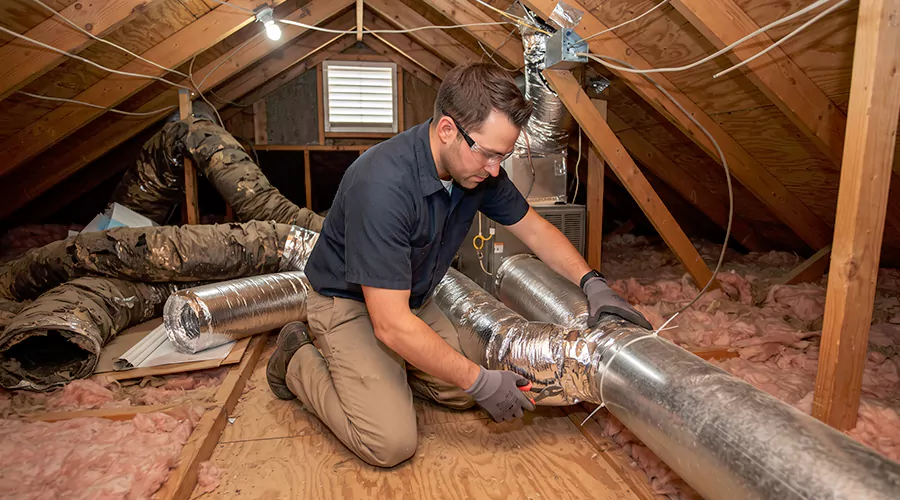
Ductwork replacement typically costs about $1,400 to $5,600 in 2026, with many whole-home projects landing near $3,500. HomeGuide reports replacement pricing of about $25 to $55 per linear foot. This Old House reports about $3,100 to $3,700 for 200 feet of replacement ducts.
Published estimates differ because not every project includes the same amount of demolition or insulation. Access also changes labor time. A partial attic project can cost far less than replacing hidden ducts throughout a two-story house.
The safest way to estimate your project is to measure the scope first. Then compare the proposed material and access conditions before treating any national average as your likely final bill.
What Does Ductwork Replacement Cost in 2026?
Duct replacement costs vary widely because pricing depends on how much duct must be removed and how difficult the new runs are to install. HomeGuide places average replacement around $1,400 to $5,600. Angi reports $452 to $2,182 for many projects.
- HomeGuide reports a national average near $3,500.
- Its replacement rate is about $25 to $55 per linear foot.
- Angi reports a lower national average near $1,251.
- Its data shows about $10 to $25 per linear foot for removal and installation.
- This Old House uses another pricing model.
- Its 2026 guide reports about $16 to $19 per linear foot. A 200-foot project comes to roughly $3,100 to $3,700.
Project Scope Planning Table
| Replacement scope | Typical 2026 planning cost |
|---|---|
| Small partial replacement | $450 to $1,500 |
| Moderate replacement | $1,500 to $3,000 |
| Typical whole-home project | $3,000 to $5,600 |
| Large 300-foot system | $4,700 to $5,600 |
| Large 400-foot system | $6,200 to $7,500 |
| Large 500-foot system | $7,800 to $9,300 |
The longer-system examples come from current This Old House pricing. The important insight is that a national average means little without considering project length. A 100-foot replacement and a 400-foot replacement should not have similar totals.
How Much Does Air Duct Replacement Cost Per Linear Foot?
Air duct replacement generally costs between $10 and $55 per linear foot in current 2026 guides. The broad range reflects different assumptions about demolition and access. This Old House reports $16 to $19 per foot while HomeGuide reports $25 to $55 for replacement work.
Angi places its current range at $10 to $25 per linear foot, while HomeGuide places replacement at $25 to $55. That higher range includes removal and replacement work under its pricing model.
Linear Foot Cost Breakdown
| Duct length | 2026 replacement estimate |
|---|---|
| 100 feet | $1,600 to $1,900 |
| 200 feet | $3,100 to $3,700 |
| 300 feet | $4,700 to $5,600 |
| 400 feet | $6,200 to $7,500 |
| 500 feet | $7,800 to $9,300 |
Linear-foot pricing works best when two estimates describe similar materials and installation conditions. It becomes less useful when one proposal replaces only accessible flex runs while another includes trunks hidden behind finished surfaces. The second project can require much more labor even if the measured duct length looks similar.
What Makes Duct Replacement More Expensive?
The largest cost drivers are system size and access difficulty. Material choice also changes the price. Projects inside open attics usually require less labor than ducts hidden behind finished walls. Removing existing material can add more work before the new system is installed.
Access
Ducts in open areas are easier to reach, while finished ceilings create more labor because access openings may be needed. Crawl spaces can also slow installation, and very tight attic spaces create similar problems. Angi identifies duct location as a major pricing factor.
Material
Flexible duct is commonly used in residential systems, while rigid metal can have a higher material cost. The correct choice depends on the system design rather than price alone.
Insulation
Ducts outside conditioned space often require insulation, including many attic installations. The insulation requirement adds both material and installation work.
Layout
A simple trunk system can require fewer fittings, while a complicated layout needs more transitions. Each change in direction can affect resistance to airflow, and ACCA Manual D specifically accounts for fitting equivalent lengths when residential duct systems are designed. This point matters because replacing ducts is not simply about buying the cheapest tube by the foot. The finished system must deliver the airflow required by the HVAC equipment.
Does Home Size Determine Duct Replacement Cost?
Home size influences cost because a larger building often contains more ductwork. Square footage alone cannot predict the final price. The number of runs matters too. A compact two-story layout can require different routing than a larger single-story home with easy attic access.
This Old House prices the project primarily through duct length rather than floor area. That approach avoids one common mistake because two 2,000-square-foot homes can need very different amounts of duct. One house may have equipment near the center, while the second house may have long runs serving distant rooms. Layout also affects fitting count, and more elbows create greater resistance.
ACCA Manual D uses system resistance and blower performance when determining residential duct design. That is why new duct sizing should not be based only on the size of the old duct. An old system can already be undersized, and copying it exactly can preserve the same airflow problem.
When Is Repair Cheaper Than Replacement?
Repair is usually cheaper when damage is limited to one section and the remaining ducts are structurally sound. Angi reports duct repairs between about $200 and $2,100 in 2026. Full replacement makes more sense when damage affects large portions of the distribution system.
A small disconnected section may need only targeted work, and a crushed flex run can also be isolated. The financial comparison changes when many sections have deteriorated, as multiple damaged branches can turn several small repairs into a large total. The condition of the duct material matters too. Repeated patches are less attractive when the surrounding material is already failing. Replacement also deserves consideration when the layout itself creates airflow problems.
Repairing holes will not correct bad sizing, because a design problem requires a design solution. ACCA Manual D covers duct sizing and pressure drop across residential systems. A good decision therefore separates physical damage from design problems. They can create similar comfort symptoms, but they do not require the same solution.
How Does a Duct Problem Progress?
Duct problems often begin with a small leak or damaged section before comfort becomes noticeably uneven. Larger failures can reduce airflow to complete rooms. Repeated repairs become more expensive when deterioration spreads across several runs. A redesigned system can become necessary when the original layout was undersized.
Progression of Duct Issues
| Stage | What you notice | Likely response | 2026 planning cost |
|---|---|---|---|
| Early | One loose connection | Minor repair | $200+ |
| Local damage | One branch performs poorly | Section repair | Hundreds |
| Multiple failures | Several rooms lose airflow | Larger repair | Up to $2,100 |
| Aging system | Many runs are deteriorated | Partial replacement | $1,000+ |
| Whole-system problem | Large portions need removal | Full replacement | $1,400 to $5,600 |
| Complex replacement | Long runs or difficult access | Larger project | $6,000+ |
Current Angi data places repair work around $200 to $2,100, while HomeGuide places average replacement at $1,400 to $5,600. This overlap is important because an expensive repair estimate can approach the lower end of replacement pricing. That does not automatically make replacement the correct choice. The amount of healthy ductwork remaining should also influence the decision.
What Are the Signs That Ducts May Need Replacement?
Duct failure often appears as a room-to-room airflow problem rather than a complete HVAC shutdown. Weak airflow is one useful clue. Visible damage provides stronger evidence. Long-standing comfort problems can also point toward a sizing issue instead of normal equipment failure.
- One room receives much less airflow than nearby rooms.
- Several ducts are visibly crushed.
- Flexible ducts have severe sagging.
- Sections have become disconnected.
- Insulation around the ducts is badly damaged.
- Multiple repairs have already been completed.
- Rooms remain uncomfortable after HVAC equipment repairs.
- Airflow becomes weaker even with a clean filter.
- Visible duct material has deteriorated.
- The current system was poorly routed.
Flexible duct condition deserves close attention. ACCA Manual D specifically addresses excessive length and sag in flexible ducts because both can affect system performance. A cold room does not prove that the duct needs replacement. The register could be closed, or a balancing problem could also create uneven airflow. Diagnosis should separate those simpler causes before major work begins.
What Safe DIY Duct Test Can You Do?
A homeowner can perform a simple airflow comparison without entering unsafe attic spaces or opening HVAC equipment. Turn the system fan on. Compare airflow at several supply registers. Record rooms with clearly weaker flow. Then inspect only duct sections that are already visible from a safe location.
- Set the thermostat fan to On.
- Walk to each main supply register.
- Hold a light tissue near the airflow.
- Do not use an open flame.
- Compare similar registers.
- Write down the weakest locations.
- Look at ducts that can be seen without climbing over ceiling framing.
- Check for obvious disconnections.
- Look for badly crushed flexible sections.
- Do not cut insulation.
Do not disturb unknown old duct coverings. Older furnace duct insulation or connection tape can contain asbestos in some homes. EPA guidance notes that duct insulation and tape around older heating equipment can contain asbestos-containing material. Leave questionable old material undisturbed.
The DIY goal is to identify the location of the symptom. It is not to demolish the duct system.
When Should You Call a Professional?
Professional evaluation makes sense when several rooms have poor airflow or visible duct damage affects multiple runs. It is also appropriate before complete replacement because new ducts should be sized for the HVAC system. ACCA Manual D provides the recognized residential design procedure for that work.
A technician can measure static pressure, check airflow at the equipment, and evaluate individual branches. The existing layout should be reviewed before HVAC duct replacement begins because simply copying each old diameter can preserve an existing design error. The new system should match blower performance. ACCA states that Manual D matches duct resistance to blower performance so rooms receive the required airflow.
Ask whether the estimate includes removal of old ducts, insulation, and balancing after installation. Permits can also affect the final bill. Angi recommends accounting for permit fees and post-installation inspection when budgeting for replacement.
Older materials require another precaution. Do not disturb suspected asbestos insulation before the material is properly evaluated. EPA notes that old duct insulation can contain asbestos.
How Can You Keep New Ductwork From Failing Early?
New ducts last longer when they are properly supported and correctly sized. Flexible runs should not be excessively compressed. Connections also need proper sealing. A well-designed system should deliver the required airflow without relying on damaged routing or severe bends. ACCA Manual D addresses these design issues directly.
Do not store heavy objects on exposed flex ducts, and watch attic work around duct runs because a technician or contractor working on another project can accidentally crush a flexible section. Keep supply registers open unless the HVAC design specifically calls for another setting, and pay attention when one room suddenly changes. A sharp airflow drop can point to a disconnected branch.
Inspect accessible duct insulation after roof leaks because water can damage surrounding materials. The AC duct replacement investment is best protected by addressing damage before several sections deteriorate. Keep installation documents as well, since a duct layout can help with later troubleshooting.
Conclusion
Ductwork replacement typically costs about $1,400 to $5,600 in 2026, though long or complex systems can exceed $7,000. Measure project scope before comparing quotes. Material and access have major effects on price. Proper sizing matters as much as the duct material itself. If several rooms have weak airflow this week, record which registers are affected before arranging a system evaluation.
Frequently Asked Questions
Many accessible residential projects can be completed within one or two days. Hidden ducts can require more time because access work must happen before installation.
Yes. Partial replacement can make sense when damage is isolated and the remaining system is in good condition. The existing layout should still support proper airflow.
Flexible duct is often less expensive to install. Final pricing depends on access and insulation requirements rather than material price alone.
Not always. Attic or crawl-space systems may be accessible without major finish work. Hidden runs can require openings in finished surfaces.
Not automatically. Existing ducts can remain when their condition and sizing are suitable for the new equipment. ACCA Manual D provides the recognized residential sizing method.
Yes. EPA guidance says some older furnace duct insulation and connection tape may contain asbestos. Suspected material should not be disturbed during homeowner inspection.